
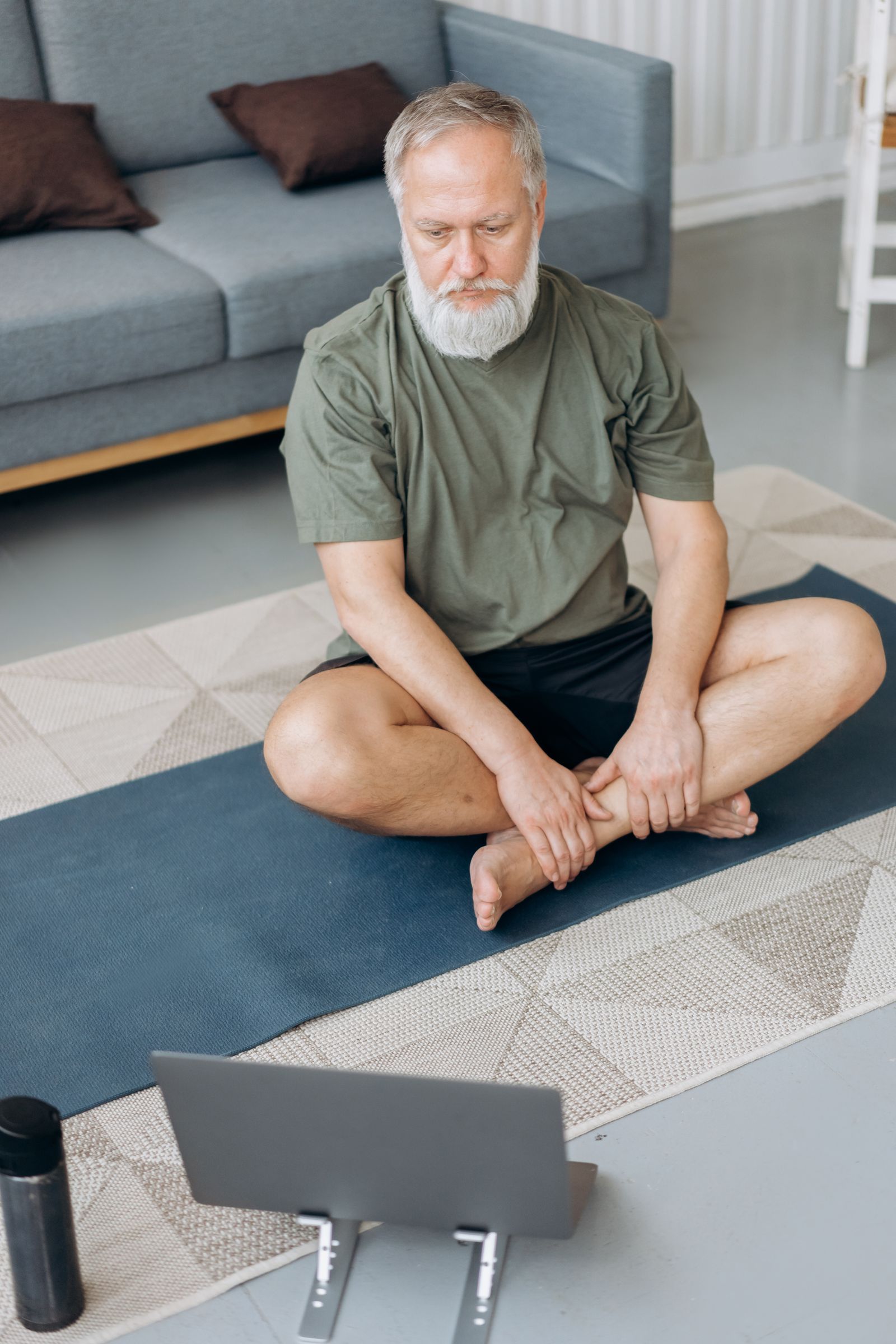
A weekly yoga plan can be useful when each day has a simple purpose. Instead of trying to remember a long sequence every time, divide the week into mobility, lower-body stretching, recovery, balance, upper-body work and one slightly longer combined routine.
Monday — Mobility basics
Begin with gentle spinal movement, shoulder circles and hip mobility. A simple sequence might use seated or standing side bends, shoulder blade movement and slow hip circles. Keep the first day familiar and uncomplicated.
Tuesday — Lower body
Use light hamstring, calf and hip stretches. Stable support from a wall or chair can make standing positions easier to organise. Hold positions only long enough to settle into a comfortable range and maintain relaxed breathing.
Wednesday — Recovery
Make the middle of the week deliberately easier. Use slow breathing, gentle seated mobility and a few movements that feel familiar from the first two days. The recovery day prevents the plan from becoming seven identical exercise sessions.
Thursday — Balance
Choose simple standing positions near stable support. A narrow stance, heel-to-toe position or brief single-leg balance can be used depending on current comfort. The aim is controlled practice, not a difficult pose.
Friday — Upper body
Focus on the shoulders, chest and upper back. Wall-supported chest opening, gentle arm reaches and slow upper-back rotation can fit into a short session. Keep the neck relaxed.
Saturday — Full routine
Combine familiar movements into a 15–20 minute sequence. Start with breathing and mobility, add lower-body stretches, include one balance position and finish with easier seated or lying movements. Because the exercises are already familiar, the longer session should still feel simple to follow.
Sunday — Easy reset
Choose gentle stretching or rest. If the week included more walking, gardening or other activity than usual, Sunday can remain very light. The plan works better when it reflects the rest of life rather than ignoring it.
| Day | Theme | Example duration |
|---|---|---|
| Monday | Mobility basics | 8–10 min |
| Tuesday | Lower body | 8–12 min |
| Wednesday | Recovery | 5–8 min |
| Thursday | Balance | 8–10 min |
| Friday | Upper body | 8–12 min |
| Saturday | Full routine | 15–20 min |
| Sunday | Easy reset | Rest or 5 min |
Make the plan easier to follow
Keep a small list of three to five movements for each theme. Reusing movements is useful because familiarity reduces setup time. A yoga mat is optional for standing routines, while a firm non-slip surface and stable support are more important than decorative equipment.
Practical takeaway
The weekly plan is a rhythm, not a test. Different days have different jobs, and the lighter days are part of the structure. Consistency becomes easier when the plan includes recovery by design.
Common questions
Do I need to learn formal yoga names?
No. Clear descriptions of the movement are enough for a simple home routine.
What if I only have ten minutes?
Use the daily theme and choose two or three familiar movements.
Can walking replace one day?
Yes. The weekly schedule can be adjusted around other comfortable movement already present in the week.